

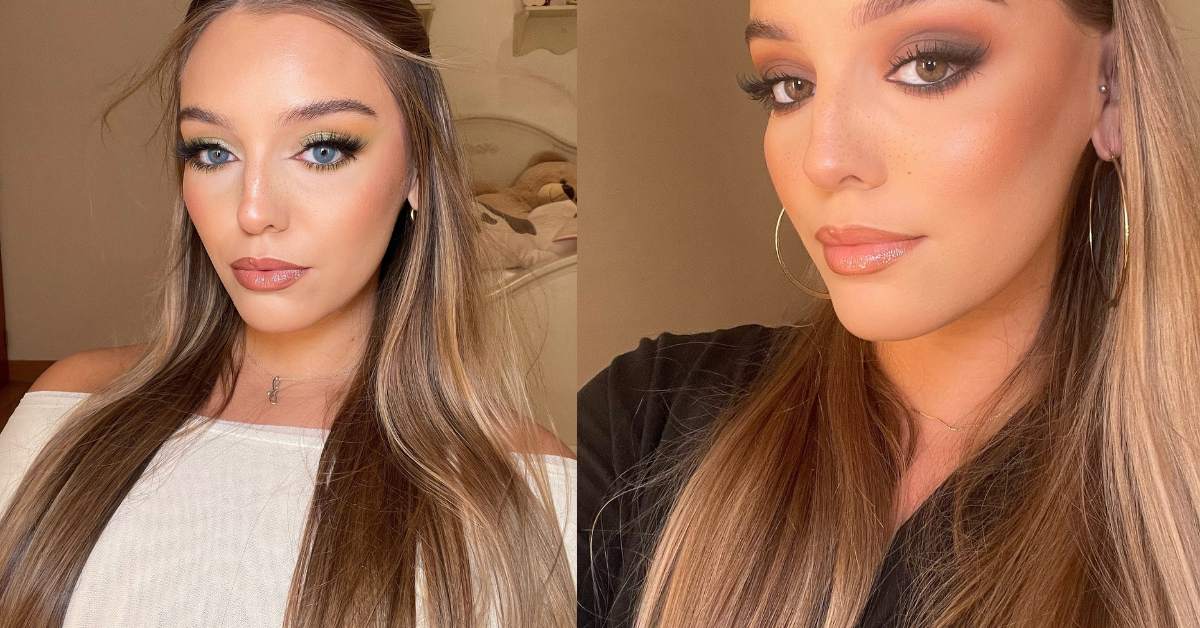
Daylight is brutally honest. It’s broad-spectrum, it hits your face from multiple angles, and it doesn’t give you the flattering blur that warm bathroom bulbs or a ring light can. So the same base that looks “perfect” indoors can suddenly look thicker, drier, more textured, or slightly off-color once you step outside.
The annoying part is this: it’s rarely one big mistake. Heavy-looking makeup in daylight usually comes from a combo of lighting + texture + too much product in the wrong places + skin prep timing.
The good news is you don’t have to throw out your whole routine. Most fixes are about thinning, placing, and letting products settle.
(And yes, checking your makeup in real daylight is a thing professional artists recommend for accuracy.)
Quick answer for skimmers
- Daylight shows texture. If your base is too matte or too powdered, it reads “thick” fast.
- Your skin prep might be fighting your foundation. Too slippery or not absorbed yet can make product sit on top and look obvious.
- You’re probably using more base than you need. Thin layers and strategic placement beat full-face coverage for everyday.
- Oxidation can make makeup look heavier. If your foundation darkens or warms up, it can read more mask-like.
- Powder is a usual suspect. The wrong powder or too much of it can look dry and “surface-y.”
- Application tools matter more than you think. A simple “prime the brush” step can make coverage look smoother and less patchy.
- Flashback is different than daylight heaviness, but similar culprits (some powders, mineral SPF ingredients, shimmer) can make complexion look off in certain lighting.
If you only do one thing: apply base in thin layers only where you need it, then step to a window for a 10-second check before you set everything.
The decision framework: what kind of “heavy” is it?
Different “heavy” problems have different fixes. Pick the description that matches what you see in daylight.
1) “It looks cakey and dry, especially around nose, mouth, and under-eyes”
Most likely: too much product + too much powder + dehydration or texture showing through.
Fix: thinner layers, less powder, more targeted placement, better prep timing.
2) “It looks like it’s sitting on top of my skin”
Most likely: skincare not absorbed, incompatible layers, or too much primer.
Fix: simplify prep, wait a few minutes, apply less product and press it in.
3) “It looks fine inside but turns darker or more orange outside”
Most likely: oxidation or shade mismatch that daylight exposes.
Fix: adjust shade/undertone, use less, and control oils where you oxidize.
4) “It looks thick in daylight but I need coverage”
Most likely: you’re using coverage everywhere instead of spot-correcting.
Fix: switch to “targeted base” (light layer overall + concealer only where needed).
I’m going to be direct here: most people don’t need full-coverage foundation across their whole face for daytime. They need it in about three small zones.
Why daylight makes makeup look worse
Daylight is “high definition” lighting
Natural daylight tends to reveal undertones, edges, and texture more accurately than typical indoor lighting. That’s why beauty brands and artists often tell you to face a window when matching and checking base makeup.
What that means for you: anything that sits on the surface (thick base, dry powder, heavy highlight, overly matte finish) becomes more visible.
Overhead lighting hides mistakes, then daylight exposes them
Bathrooms are often top-lit, which can create shadows that trick you into applying more product than you need. In daylight, those shadows disappear and suddenly you can see exactly where product has built up.
The most common reasons makeup looks heavy in daylight (and the fixes)
1) You’re using too much base, especially in “crease zones”
Crease zones: under-eyes, sides of nose, smile lines, chin crease.
Fix: switch to a placement routine
- Apply foundation starting in the center and blend outward, keeping the outer face lighter.
- Avoid stacking foundation + concealer in the same spot unless you truly need it. (That’s where thickness shows first.)
- Do a second micro-layer only on redness or unevenness, not the whole face.
Mini-check: If you can see foundation sitting in your smile lines before you even set it, you already used too much.
2) Your skincare isn’t synced with your makeup
A very common cause of “heavy” is makeup that never really bonds to skin because the layer underneath is still wet, slippery, or too rich.
Many makeup-artist routines emphasize prepping and hydrating, then applying in a way that suits your skin type and desired finish.
Fix: the 3-minute rule
- Do skincare.
- Wait about 3 minutes (or until it feels like it’s settled, not sliding).
- Then go in with base.
This won’t work if your skin is extremely dry and tight without a richer moisturizer. In that case, keep the moisturizer, but use less foundation and lean toward a satin or radiant finish so you’re not fighting your own texture.
3) Powder is flattening your skin and making texture pop
Powder can be amazing, but in daylight it can also read chalky or “layered” if you use too much or powder areas that don’t get oily.
Fix: powder only where you truly shine
- Focus on T-zone, sides of nose, maybe chin.
- Leave cheeks alone if they’re normal-to-dry.
- Press powder in lightly rather than sweeping.
Trade-off (no cute solution): the less you powder, the more glow and movement you keep, but the more likely you are to get shiny later. You get to pick your annoyance.
4) Your foundation is oxidizing
Oxidation is when foundation shifts darker or warmer as it interacts with oils and air. It can make your base look heavier because the color becomes more obvious against your neck and natural skin tone.
Paula’s Choice notes that interaction between skin oils and foundation pigments is a major reason foundations change color.
Fixes that usually help
- Use a slightly lighter shade if you consistently oxidize darker (test first).
- Keep base thin where you get oily.
- Blot oils before adding more product.
5) Your tool is depositing too much product
Some tools lay down more product than you think, especially dense brushes and dry sponges.
A practical pro tip: “priming the brush” (working product into the brush first) helps control placement and prevents patchy, heavy deposits.
Fix: prime and sheer
- Put foundation on the back of your hand.
- Work it into your brush.
- Apply in light passes.
- If needed, tap over with a damp sponge to lift excess.
6) You’re “setting” too early or too aggressively
If you set with powder before your base settles, you can trap texture and make everything look thick. A lot of artist advice emphasizes building slowly and finishing based on skin type, not doing every step by default.
Fix: give it a beat
Do your base, then do brows/eyes for a couple minutes. Come back and set only where needed.
This is optional. Skip it if… you’re always in a rush. You can still get 80 percent of the benefit just by using less product and less powder.
The “daylight-proof” base routine (step-by-step)
Step 1: Set yourself up for good light
Face a window if you can. Natural daylight is widely recommended as the most accurate lighting for makeup checks.
Step 2: Prep, then let it settle
Moisturize (and SPF, if you wear it), then wait until it feels absorbed.
Step 3: Apply base like you’re painting, not frosting
- Start center-face, blend outward.
- Keep the perimeter of your face lighter.
- Use thin layers. Multiple sources and artist guidance consistently recommend building gradually to avoid cakiness.
Step 4: Conceal only where you still see what you want to hide
Under-eyes, redness, spots. Don’t default to concealer everywhere.
Step 5: Powder only your shine zones
Press lightly. Avoid “powdering the whole face” unless you’re very oily.
Step 6: Final daylight check
Turn your head left, right, and slightly down. Look for:
- edges around jawline
- product sitting in smile lines
- under-eye creasing
- visible powder texture
If you see heaviness, don’t add more makeup. Remove some: tap with a clean damp sponge to lift excess.
Fixing heavy makeup without starting over (quick rescue)
If it’s looking cakey right now
- Lightly mist (or dampen a sponge) and press, don’t rub.
- Lift excess product from creases with the edge of the sponge.
- Add a tiny bit of concealer only where needed, not more foundation.
If it’s separating around nose/mouth
- Use less product there tomorrow. Seriously.
- Today: blot oil, then press a pinhead amount of product just where it broke up.
If it’s too matte and powdery in daylight
- Stop adding powder.
- Press a tiny amount of moisturizer onto high points (cheekbones, outer cheek) and leave the center matte. (This is a “reset the finish” trick many artists use conceptually, and it helps fast.)
Everyday variations (pick your lane)
The “I have 5 minutes” version
- Moisturize, wait a minute.
- Sheer base only center-face.
- Spot concealer.
- Powder only sides of nose.
The “I get oily but hate heavy makeup” version
- Thin layer of base.
- Conceal only.
- Powder T-zone only.
- Carry blotting sheets instead of adding more powder.
The “dry skin makes everything look thick” version
Artist advice for mature or drier skin commonly leans toward hydrating formulas, lighter coverage, and less powder because heavy formulas emphasize texture and lines.
- Hydrating prep
- Satin or radiant base
- Minimal powder (or none on cheeks)
If you already have a routine that works indoors, you can skip straight to the daylight check step and just adjust product amount and powder placement.
FAQ
Why does my makeup look fine in the mirror but heavy outside?
Indoor lighting is often warm and directional. Daylight is more even and revealing, so texture and edges show more. Facing a window is often suggested for a more accurate check.
Is heavy makeup always a technique problem?
Not always. Skin texture is normal, and daylight will show it. The goal is usually “less obvious product,” not “no texture.”
How do I stop foundation from settling into lines?
Use less product in crease zones, apply in thin layers, and avoid over-powdering. Building gradually is a common pro recommendation.
Why does my foundation turn orange/darker?
Oxidation can happen when foundation pigments interact with skin oils.
Does “priming the brush” actually help?
It can. Working product into the brush first can improve control and reduce patchiness and heavy deposits.
Is flashback the same as daylight heaviness?
Not exactly. Flashback is mainly a photography/flash issue, but some of the same ingredients (certain powders, mineral sunscreen ingredients, heavy shimmer) can make complexion look odd under intense light.
Just a little note - some of the links on here may be affiliate links, which means I might earn a small commission if you decide to shop through them (at no extra cost to you!). I only post content which I'm truly enthusiastic about and would suggest to others.
And as you know, I seriously love seeing your takes on the looks and ideas on here - that means the world to me! If you recreate something, please share it here in the comments or feel free to send me a pic. I'm always excited to meet y'all! ✨🤍
Xoxo Charlotte