
You do not need a whole new wardrobe every time the weather changes. What you usually need is a different “color framing” of the same clothes.
Most of us get stuck because we treat color like a label (summer colors, winter colors) instead of a set of dials you can turn: hue (warm vs cool), value (light vs deep), and chroma (clear vs muted). Those three dimensions are the real engine behind seasonal color analysis, and they are also the easiest way to shift your look without shopping.
This guide is about practical, low-effort palette shifts that work with what you already own: re-stacking outfits, moving color closer or farther from your face, and using a few “bridge” tricks (like scarves, layering, laundry brightening, and dyeing only when it actually makes sense).
One honest limitation up front: if your wardrobe is 95 percent one extreme (all black everything, or all pale beige, or all neon), you can still shift seasonally, but it will be more about proportion and placement than a full palette change. That is just reality.
Quick answer for skimmers
- Seasonal shifting is mostly about what’s near your face (tops, collars, scarves, earrings, glasses), not your pants.
- Think in 3 dials: hue (warm/cool), value (light/dark), chroma (muted/clear).
- Make a “core neutral stack” you already own (black, navy, cream, denim, gray, brown) and rotate 2-3 accent families by season.
- Use layering to “filter” color: tee under knit, shirt under sweater, blazer over top, scarf at neckline.
- If something feels “off,” it’s usually a value or chroma mismatch, not that the color is “wrong.”
- Laundry can shift how colors read: whites that look slightly yellow will make your whole outfit look warmer and duller. Bluing and optical brighteners work by adding or reflecting blue light, which visually counteracts yellowing.
- Dyeing is worth it only when the fabric type and dye type match (cotton vs polyester matters a lot).
If you only do one thing: change the color right under your face (collar layer, scarf, earrings, lipstick). That single swap can make last season’s outfit look intentional again.
The decision framework: the 10-minute seasonal shift
Step 1: Pick your “anchor neutral” for this season
Choose one neutral you already own a lot of, and let it lead for 6-12 weeks.
- Cold months anchors: black, charcoal, deep navy, espresso
- Warm months anchors: cream, stone, light denim, soft navy
This is not a rule, it is a shortcut. A consistent anchor neutral makes everything else easier.
Step 2: Turn one dial at a time
Use the three dials to decide what to change:
- Hue: warmer (more yellow/orange) vs cooler (more blue/pink).
- Value: lighter vs deeper.
- Chroma: clear/saturated vs muted/soft (more gray added).
Seasonal shifts often look like:
- Autumn: warmer + deeper + softer
- Winter: cooler + deeper + clearer
- Spring: warmer + lighter + clearer
- Summer: cooler + lighter + softer
You do not need to “be” a season to use these moves.
Step 3: Use the “near-face rule”
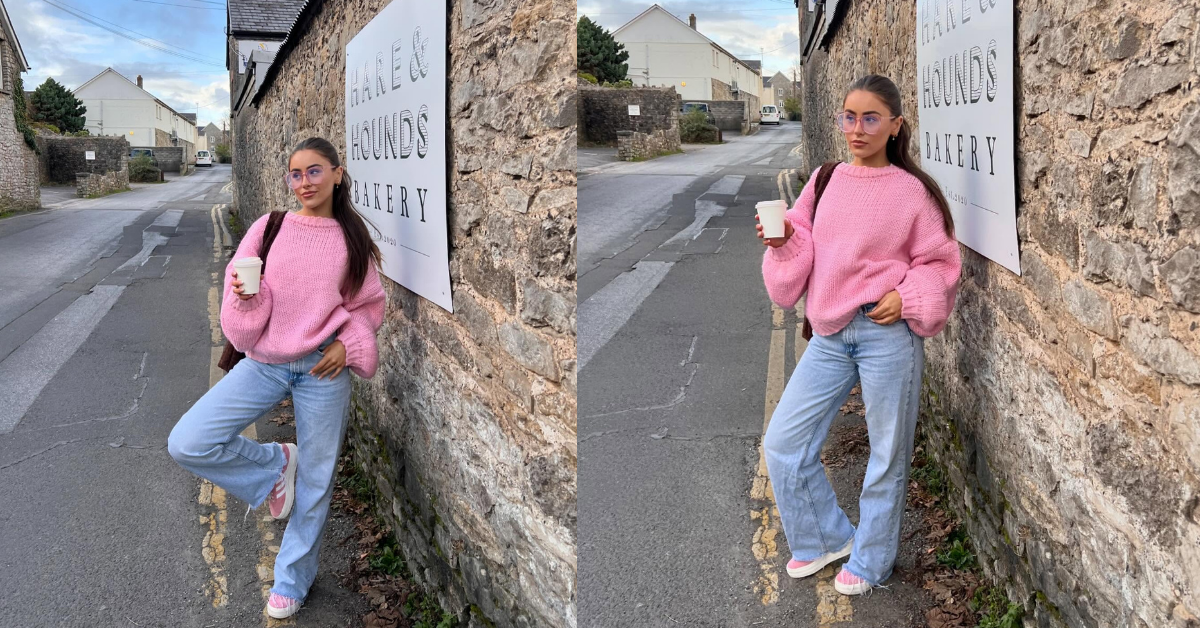
Put your most flattering or seasonally aligned colors above the bust line. Everything below can stay boring.
Step 4: The principle that makes this work
You are not changing your wardrobe. You are changing the color proportions.
Same sweater, different outcome:
- Winter look: black base + clear accent near face
- Summer look: light base + softened accent near face
This is the part most people skip, and it is why they think they “need new clothes.”
Common mistakes (and the quick fixes)
Buying “a seasonal color” with no plan
Fix: pick 1 anchor neutral + 2 accent families first.
- Changing the wrong piece
Fix: change the piece closest to your face (collar layer, scarf, earrings). - Forcing bright color when you actually need contrast control
Fix: add contrast with value (light vs dark) instead of saturation. - Thinking a color is wrong when it’s just the wrong fabric or finish
A bright color in a shiny fabric reads louder than the same color in a matte knit. Chroma is not just color, it is also texture and finish. - Over-dyeing or dyeing the wrong fiber
Cotton takes many dyes well. Polyester is a different beast.
One trade-off with no perfect solution: if you love a color that clashes with your undertone, you can “buffer” it with layers, but it will never look as effortless as a naturally aligned shade. You can still wear it. Just do not expect it to feel invisible.
Deep dive: how to “season-shift” the clothes you already own
1) Build a mini palette map from your closet
Pull out 12-20 items you wear constantly. Do not overthink it.
Sort them into:
- Neutrals (your anchor options)
- Accents you already own (blues, greens, reds, pinks, etc.)
- “Almost works” items (you like them, but something feels off)
Now look for patterns:
- Are most of your accents muted or clear?
- Do you own more warm browns or cool grays?
- Are your tops mostly light or deep?
This tells you what seasonal shifting will be easiest.
2) The “color sandwich” method (fastest no-buy trick)
Make outfits as a 3-layer stack:
- Base layer: neutral tee/tank/shirt
- Mid layer: knit, cardigan, overshirt
- Top layer: jacket, blazer, coat, scarf
Then shift seasonally by adjusting just one layer:
- To look more winter: keep base dark, add clearer accent near face
- To look more summer: keep base light, add softer accent near face
- To look more autumn: add warm, softened layer (camel, rust, olive)
- To look more spring: add warm, clearer layer (coral, warm green, aqua)
This is why layering is so powerful: it lets you “edit” color without new pieces.
3) Your “frame pieces” matter more than your outfit
Frame pieces = anything within a hand’s width of your face:
- collars and necklines
- scarves
- earrings and necklaces
- glasses frames
- hats
- even hair tone and lipstick
If you want maximum impact with minimum changes, focus here.
I usually tell people to stop chasing variety in the morning. One good default outfit formula, plus a couple of frame-piece swaps, does more than ten “new” outfits.
4) Use value contrast to create seasonal vibe
If your winter outfits feel heavy in summer, it is often because the overall value is too deep.
Try these swaps:
- black tee → white or cream tee under the same jacket
- dark jeans → light denim with the same top
- dark top + dark bottom → dark bottom + light top
You are not changing your style. You are changing the lightness balance.
5) Use chroma control to make colors feel “in season”
Chroma is the dial people forget.
- Cold months often tolerate clearer, higher-chroma accents.
- Warm months often look easier with slightly softened, dusty, or sun-faded versions.
How to soften without buying:
- Choose the matte version of what you own (cotton tee over satin cami).
- Put a textured layer over it (open knit, linen shirt, denim jacket).
- Move the bright color away from your face (use it as a bag or shoes instead of a top).
6) Laundry and “color clarity” (underrated)
If your whites are yellowing or your blacks are fading, your whole palette shifts whether you want it to or not.
A few reality-based notes:
- Optical brighteners work by absorbing UV and re-emitting visible blue light, making fabrics appear brighter and whiter.
- Traditional laundry bluing adds a tiny blue tint to visually counteract yellowing.
This matters because dingy whites make outfits read warmer and duller, and faded darks make outfits read softer and more casual.
This is optional. Skip it if laundry optimization makes you want to scream. But if you are trying to “season shift” on hard mode, restoring color clarity is one of the cheapest wins.
7) Dyeing: only when it actually makes sense
Dyeing can be a no-buy palette reset, but only if you respect fabric science.
Key idea: dyes bond differently depending on fiber type, which affects permanence and colorfastness.
Reactive dyes, for example, are commonly used for cellulose fibers like cotton because they form strong bonds and can be very washfast.
Practical guidelines:
- Best candidates: 100% cotton, linen, rayon/viscose (usually), silk and wool with the right dye type
- Tricky candidates: polyester, acrylic, blends with high synthetic content
- Smart targets: tired black tees, washed-out navy, “almost works” beige, too-bright items you want to mute
If you are dyeing to shift seasons:
- To go autumn: overdye with warm brown, rust, olive
- To go winter: overdye toward deeper navy, charcoal, black
- To go summer: lighten is hard without bleaching (which can damage fibers). Better to soften with layering and pairing instead.
One caution: colorfastness depends on compatibility between dye and fiber and other factors. If you dye something you love and it bleeds forever, it will become the item you never wear.
A simple “season-shift” routine you can actually repeat
If you already have a routine that works, you can skip this section and go straight to the variations below.
The Sunday reset (15 minutes)
- Pick your anchor neutral for the next 2 weeks.
- Choose 2 accent families (example: olive + warm cream, or navy + icy pink).
- Pre-build 6 “default” outfits using the color sandwich method.
- Pick 3 frame-piece swaps (scarf, earrings, lipstick) that push the season.
The weekday default (2 minutes)
- Wear a neutral base.
- Add one accent near your face.
- Keep the rest simple.
If your mornings are unpredictable, some of this prep simply will not stick, and that’s fine. The goal is not perfection, it is fewer bad mornings.
Variations by use case
Best for minimalists
- 1 anchor neutral
- 1 accent family
- 1 metal tone (gold or silver)
Make seasonal shifts by changing only the near-face accent.
Best if you mostly wear black
You can still season-shift:
- Winter: black + clear jewel accent near face
- Summer: black + softer, light near-face buffer (cream tank, light scarf)
You do not need to abandon black. You just need to control the contrast and the framing.
Best if you want “spring” energy but own autumn colors
- Keep your warm base (camel, tan, olive)
- Add lighter value near your face (cream, light peach, warm white)
- Use clearer accents in small doses (earrings, bag)
Best for office wardrobes
- Keep suits and trousers the same
- Rotate 2 seasonal blouse/top colors
- Add one seasonal scarf or tie color
This is where the near-face rule pays off the most.
Best for casual wardrobes (denim heavy)
- Switch light vs dark denim by season
- Keep tops consistent
- Use layering to add warmth/coolness visually
Best if you hate accessories
Use “built-in” frame pieces:
- collar shapes (crew vs v-neck vs open shirt)
- hair parting and styling (seriously, it changes perceived contrast)
- neckline layering (tee under knit, shirt under sweater)
FAQ
Do I need to know my season for this to work?
No. The three dials (hue, value, chroma) are enough to make smarter swaps.
Why does a color look great in summer but harsh in winter (or vice versa)?
Often it is not the color, it’s the chroma and value. In different light, a clear bright can feel too loud, or a soft dusty shade can feel dull.
What if I do not own “seasonal” colors at all?
Then shift by proportion: change what’s near your face, lighten or deepen the base, and use texture to soften or sharpen the look.
Is laundry bluing the same as bleach?
No. Bluing works by adding a tiny blue tint to counter yellowing; bleach removes stains but can weaken fibers over time.
Do optical brighteners actually do anything?
Yes, they can make fabrics appear brighter by manipulating light, often by boosting the blue end visually.
Can I dye polyester to shift a palette?
Polyester typically needs different dye chemistry and process than cotton. If you are new to dyeing, start with cotton or other compatible fibers.
What is the fastest way to look “more seasonal” immediately?
Change the color at your neckline (top layer or scarf) and match your metal tone and lip color to that direction.
Will this work if I only wear athleisure?
Yes. The near-face rule still applies: jacket color, hoodie color, cap, and even sunglasses frames do most of the work.
Just a little note - some of the links on here may be affiliate links, which means I might earn a small commission if you decide to shop through them (at no extra cost to you!). I only post content which I'm truly enthusiastic about and would suggest to others.
And as you know, I seriously love seeing your takes on the looks and ideas on here - that means the world to me! If you recreate something, please share it here in the comments or feel free to send me a pic. I'm always excited to meet y'all! ✨🤍
Xoxo Charlotte