
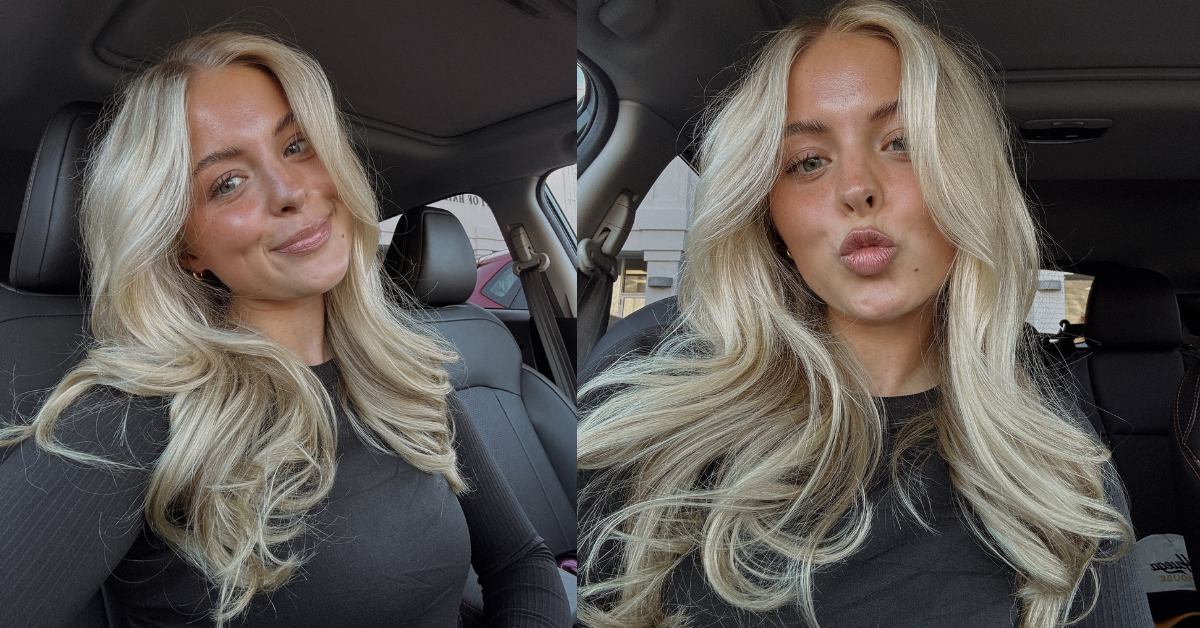
Salon hair isn’t “better hair”. It’s better conditions.
A stylist is working with (1) time, (2) trained technique, (3) pro tools, and (4) controlled products, then finishing everything in a way that locks the shape in. At home, most of us do the opposite: we rush, we skip sectioning, we use too much heat in the wrong spots, and we stop the moment it looks dry. The gap is mostly process, not genetics.
Here are the biggest differences that actually matter, and how to steal the parts that make the biggest impact.
The quick answer for skimmers
- Time + sectioning is the #1 salon advantage. Most “home hair” problems are really “I tried to style too much hair at once.”
- Tension + airflow direction is what makes blowouts smooth. Stylists use a concentrator nozzle and keep airflow aimed down the hair shaft for control.
- Cooling sets the shape. Hair holds styles through bonds that reset as hair dries and cools, so finishing with cool air helps lock results in.
- Product dosage is different. Salons use smaller amounts placed strategically, not a heavy “coat” everywhere.
- Water quality can mess with your results. Hard water minerals (like calcium and magnesium) can contribute to dullness, dryness, and buildup that makes hair harder to style.
- Color is about control, not just dye. Salons customize formulas and adjust as they process; at home you are committing to a one-shot plan.
If you only change one thing: section your hair into smaller sections than you think you need, and style each section with real tension.
What “salon hair” actually is
When you leave a salon and your hair looks glossy, bouncy, and expensive, you are seeing a bunch of small advantages stacking:
- A clean canvas (hair is properly cleansed and rinsed)
- Correct moisture level (not soaking wet, not half-frizzed dry)
- Intentional product placement (root lift where needed, smoothing where needed)
- Technique (tension, direction, and consistent heat)
- A set finish (cool down, light finishing product, sometimes a final polish)
None of this requires magic products. It requires doing the boring parts.
Difference #1: Salons style in sections, homes style in hope
At a salon, your hair is divided into manageable panels so each part dries and shapes evenly. At home, we tend to grab random chunks and blast them until “dry-ish”.
Why it matters:
If a section is too thick, the outside gets overcooked while the inside stays damp. Damp hair breaks the set later, which is why your style collapses or frizzes the moment you step outside.
The fix at home:
- Split hair into at least 4 zones: top, sides, back.
- Then split each zone into smaller horizontal sections (especially for thick hair).
- Work bottom-up.
This won’t work if you refuse to use clips. I’m not judging, but sectioning without clips is like cooking without a pan.
Difference #2: Stylists use tension plus controlled airflow, not just heat
The salon “smooth” isn’t from higher heat. It’s from tension (brush pulling hair taut) + directional airflow (dryer aimed down the hair shaft) + a concentrator nozzle so air goes where it’s supposed to go.
That downward airflow is a big deal because it helps reduce frizz and create a more polished finish, which is why concentrator nozzles are standard in professional blow-drying technique.
The fix at home (simple version):
- Put the nozzle on.
- Aim airflow down, not across.
- Use a brush that gives real tension (round brush for volume, paddle for sleek).
- Move slowly enough that the section actually dries in the shape you want.
If you do one “pro” habit: dry the roots with intention, then shape mids and ends. A lot of frizz starts because roots were dried in a messy direction.
Difference #3: Salons stop styling at the right moisture level
Stylists almost never start a blowout on dripping wet hair. Hair is usually towel-dried, sometimes rough-dried first, then styled when it is damp but not saturated.
Why: if hair is too wet, you spend forever heating it, which increases damage risk and makes you impatient. If hair is too dry, you are basically trying to reshape hair that has already set in a frizzy pattern.
A common at-home blow-dry approach is to get hair to about 70 to 80% dry first, then go in to shape and smooth, especially with blow-dry brushes.
Difference #4: Finishing matters because hair sets as it cools
Hair changes shape when bonds are broken by water or heat, then reforms as hair dries and cools. That is why your style “takes” when it cools down.
This is also why a cool-air finish can help make a blowout last longer.
Home habit that mimics a salon finish:
- After each section looks right, hit it with cool air for a few seconds.
- Do not brush it out immediately.
- Let the whole head cool before you start fluffing and spraying.
Trade-off with no perfect solution: If you want maximum hold, you usually need more product. More product can mean more buildup and a heavier feel. You get to choose which annoyance you prefer.
Difference #5: Salons control product placement and dosage
Most people over-apply product at home. Stylists tend to use:
- less product overall
- more targeted placement
- layering that makes sense (protect, then style, then finish)
At home, we often do: protect + smoothing cream + oil + spray, all over, then wonder why hair looks flat.
A practical “salon-like” product map:
- Heat protectant: mid-lengths to ends (not scalp)
- Root lift or mousse: roots only (if you want volume)
- Smoothing cream: only where you frizz (often outer layer and ends)
- Oil: 1 to 3 drops on ends after styling, not before
Optional. Skip it if your hair already gets weighed down easily: don’t use oil at all on blowout days. Use a light finishing spray instead.
For heat safety, the American Academy of Dermatology recommends lowering overall heat exposure (like blow-drying less often) and avoiding excessive heat because it can damage hair.
Difference #6: Water quality can make “home hair” harder than it should be
This one surprises people: you might be doing everything right, but your water is working against you.
Hard water contains minerals like calcium and magnesium, and research has looked at how hard water affects hair properties. More consumer-facing expert reporting also notes hard water can contribute to dullness, dryness, frizz, and color fading for some people.
Signs hard water is affecting your styling:
- conditioner never feels like it “soaks in”
- hair feels rough even when clean
- shampoo doesn’t lather well
- blonde or highlights go brassy faster than expected
Fixes that help most:
- Use a chelating or clarifying shampoo occasionally (not daily).
- Consider a shower filter if hard water is confirmed in your area.
- Focus conditioner on mids and ends, rinse thoroughly.
Difference #7: Salon color is controlled and customized, box color is one plan
Even when the dye itself is “good”, salons have two huge advantages: custom formulation and active monitoring.
On the safety side, Cleveland Clinic notes that boxed and salon dyes both involve chemicals and stresses following directions carefully, especially if you are doing it at home.
U.S. Food and Drug Administration also advises basics like patch testing, not leaving dye on longer than directed, wearing gloves, rinsing well, and not mixing different hair dye products.
And for damage risk, American Academy of Dermatology specifically warns that lightening hair more than about three shades generally requires higher volumes of peroxide, which increases damage risk.
The practical takeaway:
If you are trying to go significantly lighter, fix banding, correct undertones, or do anything balayage-ish, salon control is usually worth it.
What salons have that you can’t fully copy at home
Let’s be honest about the real gap:
- Experience and speed. A stylist can see your growth pattern, cowlicks, density, and porosity quickly and adapt.
- Two hands plus angles. Styling the back of your head is just harder solo.
- Accountability. You sit there until it’s finished. At home, you quit when you get tired.
That’s fine. You don’t need perfection. You need a routine that gives you fewer bad hair days.
The at-home routine that gets you closest to “salon hair”
1) Start with the right dry level
- Towel dry gently (no aggressive rubbing).
- Rough-dry to damp or about 70 to 80% dry before you start shaping.
2) Apply products like a stylist
- Heat protectant through mids and ends.
- Root product only if you want lift.
- Keep oils for the end.
3) Section smaller than you think
- Clip your hair into zones.
- Work bottom-up.
4) Style with tension and direction
- Concentrator nozzle on.
- Airflow down the strand.
- Brush creates tension.
5) Cool-set
- Cool air to finish sections.
- Let everything cool before you disturb it.
6) Finish light
- Small amount of finishing product.
- Brush out only if needed.
Common “home hair” mistakes that make hair look worse
- Too much product, too early
Fix: half the amount, and keep it off the roots unless it is a root product. - No nozzle on the dryer
Fix: put it on and keep airflow controlled. - Styling too wet or too dry
Fix: aim for damp styling hair, not dripping and not already frizzed-set. - Turning heat up instead of slowing down
Fix: slower passes with tension beat blasting. - Ignoring heat damage
Fix: lower heat and reduce frequency when possible.
So which should you aim for, salon results or salon principles?
Aim for salon principles.
Because the real difference between salon hair and home hair is rarely your tools. It’s the boring stuff: sectioning, tension, controlled airflow, and a cool-set finish.
If you want the most “everyday realistic” upgrade, do this:
Master one default style you can repeat. Not five techniques. One.
Just a little note - some of the links on here may be affiliate links, which means I might earn a small commission if you decide to shop through them (at no extra cost to you!). I only post content which I'm truly enthusiastic about and would suggest to others.
And as you know, I seriously love seeing your takes on the looks and ideas on here - that means the world to me! If you recreate something, please share it here in the comments or feel free to send me a pic. I'm always excited to meet y'all! ✨🤍
Xoxo Charlotte