
Most outfits that feel “off” are not a color problem or a styling problem. They are a fabric weight problem.
Fabric thickness and density change how clothing hangs, wrinkles, clings, holds shape, and reads on camera. It’s why a simple white tee can look expensive on one person and pajama-ish on another, even if the cut is similar. The difference is often the weight (and how that weight behaves).
Fabric weight is commonly measured as GSM (grams per square meter). Higher GSM generally means a heavier, denser fabric with more structure, while lower GSM tends to be lighter and drapier.
This guide gives you a practical “weight test” you can do at home, plus quick rules for when thin looks chic and when it looks cheap.
Quick answer for skimmers
- Lightweight fabric = movement + drape + breathability, but it can cling, wrinkle, and look sheer.
- Midweight fabric = the most forgiving: it holds shape better, wrinkles less than ultra-light, and still layers well.
- Heavyweight fabric = structure + polish + durability, but it can feel bulky and “stiff” if the cut is not right. (Denim is a clear example: heavier weights are tougher and stiffer, lighter weights feel softer and more breathable.)
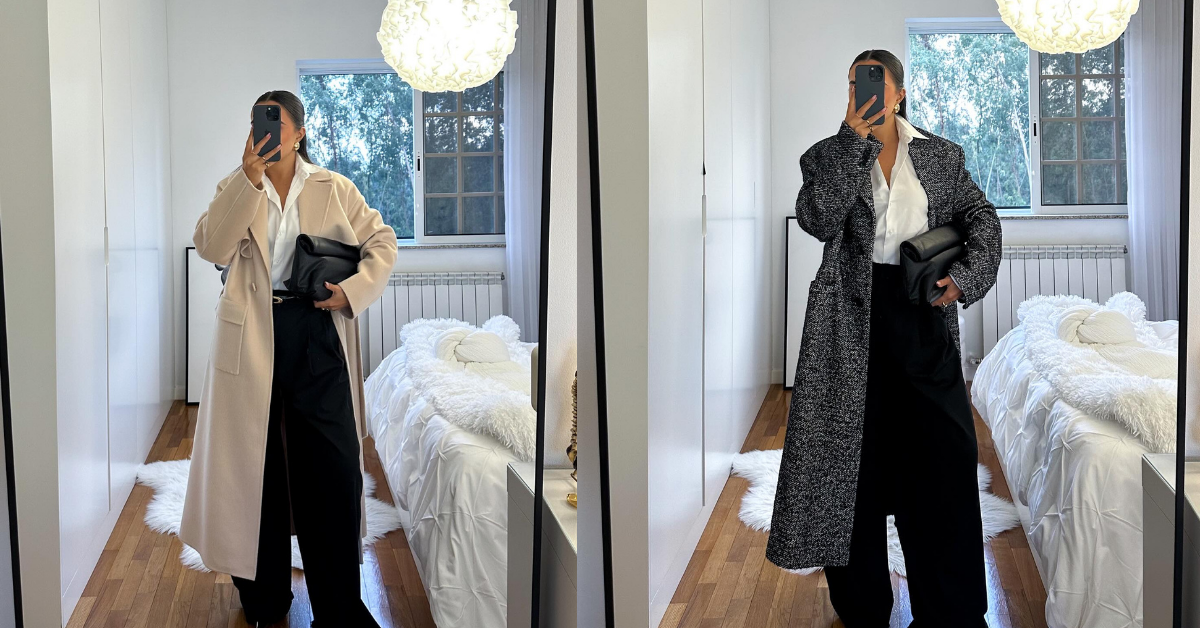
- The fastest upgrade is usually one heavier anchor piece (coat, blazer, trousers, denim, structured bag) plus simpler basics.
- If you want “expensive-looking,” aim for opacity, smooth drape, and clean seams more than “thick = good.”
- Trade-off with no perfect solution: heavier fabrics tend to photograph and structure better, but they can feel warmer and less fluid.
If you only do one thing: stop buying “mystery thin” tops. Hold them up to a window. If you can clearly see your hand through it, it’s going to look like a layering piece, not a standalone top.
What “fabric weight” really changes
Think of fabric weight like the physics behind style:
1) Drape vs structure
Lighter fabrics flow and move. Heavier fabrics hold their own shape.
2) Opacity and surface quality
Thin fabric can go sheer, show bra lines, and highlight underwear seams. Dense fabric hides more and reads smoother.
3) Wrinkling and “effort”
A lightweight shirt that wrinkles instantly can look messy by 10:30. A slightly heavier poplin or knit often looks “put together” longer.
4) The silhouette story
- Lightweight: follows the body (sometimes too much)
- Midweight: skims the body
- Heavyweight: shapes the body (creates clean lines)
This won’t work if your climate is hot and humid and you hate feeling warm. In that case, you can still use the weight test, but you will lean lightweight and focus on opacity and drape instead of thickness.
The Outfit Weight Test you can do in 2 minutes
You do not need a scale or GSM numbers to get this right. Use these quick checks in good light.
Test 1: The Window Test (opacity)
Hold the fabric up to a window or bright lamp.
- If you can see your fingers clearly: it’s likely a layering fabric.
- If you can see a faint outline: wearable, but choose nude underwear and smooth bra lines.
- If you can barely see anything: it will read more “finished” on its own.
Test 2: The Pinch and Drop (drape)
Pinch a section of fabric, lift it, then let it fall.
- Does it fall in a smooth column? That’s drape.
- Does it collapse and cling? That’s a thin fabric with little body.
- Does it hold a shape or a fold? That’s structure.
Test 3: The Scrunch Test (wrinkle behavior)
Scrunch it in your fist for 3 seconds, then release.
- If it stays crumpled: it’s a high-wrinkle fabric (not bad, but plan for it).
- If it relaxes quickly: it will look neater through the day.
Test 4: The Seam Test (cheap vs clean)
Look at hems and seams:
- If the hem ripples and twists, it often reads cheaper.
- If the seam lays flat and feels stable, it tends to look more polished.
Test 5: The “Noise” Test (movement)
Walk in it. Listen and feel.
- Crisp swish can look chic in structured skirts and trousers.
- Loud rustle plus static cling is where outfits start looking fussy.
Weight categories that actually help you shop
If brands list GSM, it helps. If they do not, you can still use the tests above.
A lot of apparel guides group fabrics roughly like this:
- Ultra-light: under ~100 GSM
- Lightweight: ~100–170 GSM
- Midweight: ~170–340 GSM
- Heavyweight: above ~340 GSM
For tees specifically, you will often see ranges like:
- Lightweight tees around 120–150 GSM
- Midweight around 180–200 GSM
- Heavyweight around 200 GSM+
You do not need to memorize this. You just need to recognize what you like on your body and in your life.
Where thin fabric looks elevated
Thin is not the enemy. Thin looks expensive when it’s intentional.
It looks great when:
- It’s meant to float (slip skirts, drapey blouses, summer dresses).
- You are layering it (fine knits under blazers, sheer tops over bralettes).
- The fabric has a beautiful fiber and finish (silk-like drape, matte viscose, quality linen).
Styling rule that saves thin fabrics
Give the outfit one “grounding” piece:
- structured belt
- tailored trouser
- clean jacket
- solid shoe
That anchor makes the lightness feel deliberate.
Where thin fabric looks cheap fast
Thin usually looks less expensive when it reads accidental:
- White tees that go sheer
- Leggings that go shiny and translucent when stretched
- Dresses that cling and outline every seam
- Blouses that wrinkle aggressively and lose shape by midday
This is where people blame their body, but it is often the fabric. The garment is asking the fabric to do a job it cannot do.
The “anchor piece” strategy
If you want outfits to look more expensive with minimal effort, do this:
One heavier anchor + lighter supporting pieces.
Examples:
- Heavy denim + simple knit tee
- Structured trousers + lightweight blouse
- Midweight blazer + tank top
- Heavier cardigan + slip skirt
I usually tell people to stop chasing ten trendy tops and buy one pair of trousers that holds its shape. It makes everything else look better instantly.
Fabric weight by wardrobe category
T-shirts and tanks
If you want a tee to look “standalone,” midweight is your friend. Tee weight guides commonly frame lightweight around 120–150 GSM and heavier options at 200 GSM+.
Weight cheat:
- Lightweight tee: best for heat and layering, can look casual or sheer
- Midweight tee: best for everyday polish
- Heavyweight tee: best for structure, can feel boxy if the cut is stiff
Denim
Denim weight is usually given in ounces per square yard. Higher ounce denim is tougher and stiffer; lighter denim is softer and more breathable.
Many denim guides classify lightweight as under 12 oz/yd², midweight around 12–16 oz/yd², and heavyweight above that.
Practical tip: if jeans feel “papery” and collapse, they can look less structured. If they feel like cardboard, they may look stiff unless the fit is perfect.
Knitwear
Thin knits can look luxe if they are smooth and not pilling, but they show bra lines and lumps. Midweight knits tend to give that “expensive drape” without clinging.
Trousers
This is where weight changes everything.
- Too light: wrinkles, clings, shows pocket lines
- Better: fabric with enough body to skim and keep a crease
Blazers and coats
Structure comes from both fabric weight and internal construction, but weight matters a lot. For wool specifically, brands and textile guides often discuss weights in GSM ranges for different seasons (lighter around ~150–190 GSM for merino layers, medium 200–300, heavy 300+).
For outerwear, you will see heavier wool fabrics described in higher GSM ranges, which gives more warmth and shape.
Common mistakes and fixes
Mistake 1: Pairing two flimsy items together
Example: thin tee + thin cardigan + thin leggings.
Fix: swap one piece for structure (midweight tee, sturdier trouser, or heavier knit).
Mistake 2: Assuming “thicker” always means “better”
Some heavy fabrics look bulky and age an outfit if the cut is dated.
Fix: look for smoothness and clean lines, not just weight.
Mistake 3: Buying lightweight in the wrong color
Light colors show sheerness and lines more.
Fix: if it’s a light color, demand higher opacity or plan to layer.
Mistake 4: Expecting drapey fabric to look tailored
A floaty fabric will not hold a crisp shape.
Fix: use drape for soft silhouettes, use structure for tailoring.
Outfit formulas that prove the point
1) “Expensive casual”
- Heavyweight or midweight tee
- Midweight denim
- Structured shoe
2) “Soft but intentional”
- Slip skirt (lightweight)
- Chunkier knit (heavier)
- Clean minimal bag
3) “Work polish without trying”
- Structured trouser
- Simple top (can be light)
- Blazer that holds shape
4) “Summer without looking flimsy”
- Lightweight linen shirt (meant to be airy)
- Structured shorts or trousers
- Solid sandal and minimal jewelry
This is optional. Skip it if you already have a uniform that works and you just want to shop smarter. The tests alone will do a lot.
FAQ
Is GSM the only thing that matters?
No. Fiber, weave/knit, finish, and construction matter too. But GSM is a useful clue for drape and structure.
Why do some lightweight fabrics look expensive?
Because they are supposed to float and move, and the fiber and finish are high quality. Thin plus intentional drape can look very luxe.
How do I make lightweight pieces look better?
Give them structure somewhere else: shoes, belt, jacket, or a sturdier bottom. Avoid combining multiple flimsy items in one outfit.
What weight tee should I buy if I hate cling?
Look at midweight and heavier tees. Many guides place midweight around 180–200 GSM and heavyweight at 200 GSM+.
Why do my jeans feel different even at the same size?
Denim weight and composition change the feel. Denim is commonly labeled by ounces per square yard, and higher weights tend to be stiffer and tougher.
Just a little note - some of the links on here may be affiliate links, which means I might earn a small commission if you decide to shop through them (at no extra cost to you!). I only post content which I'm truly enthusiastic about and would suggest to others.
And as you know, I seriously love seeing your takes on the looks and ideas on here - that means the world to me! If you recreate something, please share it here in the comments or feel free to send me a pic. I'm always excited to meet y'all! ✨🤍
Xoxo Charlotte