
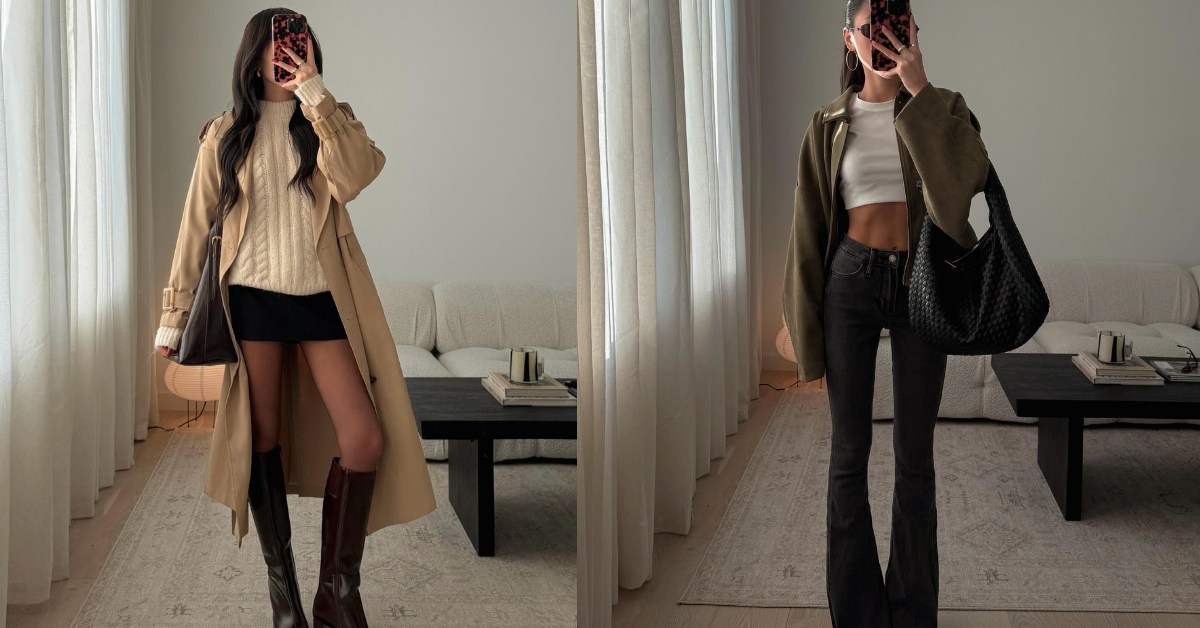
Most “something feels off” outfits have the same problem: too many focal points. Your eye doesn’t know where to land. Your brain reads it as messy, even if every single item is cute on its own.
The One-Statement Rule is the fix: pick one hero, then build a quiet supporting cast. It’s not about dressing boring. It’s about creating a clear hierarchy so the outfit looks intentional.
A lot of stylists explain this the same way: when multiple statement pieces compete, the look can feel visually overloaded, and choosing one focal item creates focus and balance.
One honest limitation up front: this won’t work if your personal style is joyful maximalism and you genuinely want clashing energy. You can still use the framework, but you’ll bend it. (I’ll show you how.)
Quick answer for skimmers
- An outfit looks “put together” when it has one clear hero (statement) and everything else supports it.
- Statement can be: color, print, silhouette, texture, or accessory.
- Keep the rest simple using quiet basics, tonal pieces, or clean shapes.
- If you want to add personality without competing, add one intentional styling moment (like cuffed sleeves, a tucked knit, a belt, or a sleek hair choice).
- When in doubt: one loud thing, one neutral anchor, one small finishing detail.
If you only do one thing: decide what you want people to notice first. That’s your statement. Everything else gets quieter
What counts as a “statement” (and why outfits start fighting)
A statement piece is anything that pulls attention first. Usually it’s one of these:
- Print (leopard coat, striped pants, bold florals)
- Color (bright red jacket, head-to-toe chartreuse)
- Silhouette (oversized blazer, dramatic wide-leg, sculptural top)
- Texture (faux fur, fringe, sequins, patent, metallics)
- Accessory energy (giant earrings, huge belt buckle, statement bag)
When you wear two or three of those at the same time, your outfit can still be stylish, but it’s harder to make it look effortless. That “trying too hard” feeling is usually just competing focal points
The decision framework
If you want to look polished fast
- Make the statement one item only
- Make everything else solid, simple, and fitted or cleanly relaxed
- Add one small finishing detail (lip color, sleek bun, crisp cuff)
This is basically the “fashion math” idea: statement + grounding neutral + intentional styling moment.
If you want to look creative but still cohesive
- Use one statement piece
- Echo it once (color OR texture OR metal, not all of them)
- Keep the rest quiet
If you want to wear two statement pieces on purpose
- Make one the main statement and one the secondary statement
- The main one gets 70% of the attention, the secondary gets 30%
- Everything else is neutral and simple
This is where people go wrong: they do 50/50. That’s where the “competition” happens.
Step 1: Pick your hero category
This is the simplest way to choose your statement without overthinking.
Choose ONE hero:
- Hero print (patterned pants, statement coat)
- Hero color (bright coat, bold monochrome)
- Hero silhouette (dramatic skirt, oversized jacket)
- Hero texture (fringe, faux fur, sequins)
- Hero accessory (bag, shoes, jewelry)
A recent example of this formula shows up in Who What Wear, which describes a core outfit approach as one statement piece plus a grounding neutral plus one intentional styling moment.
Step 2: Choose your “quiet base” (the part that keeps peace)
Your base is what makes the statement look expensive instead of chaotic.
Quiet base options that work almost every time:
- solid tee or knit
- straight or wide-leg denim
- tailored trousers
- simple tank + clean cardigan
- minimal dress (slip, knit column, simple midi)
I usually tell people to stop chasing variety here. One really good quiet base does more than ten “maybe” tops. Build a base you trust, then rotate the statement.
Step 3: Add one “intentional styling moment” (optional, but powerful)
This is optional. Skip it if you’re already happy with your outfits and you just wanted the statement rule.
If you want the outfit to look styled (not just assembled), add one small move:
- half-tuck the front of a knit
- cuff sleeves once
- belt a coat
- slick hair back
- choose one sharp shoe instead of a casual one
That “one finishing detail” idea is part of the modern formula Who What Wear highlights: statement + neutral + intentional styling moment.
The 5 rules that keep outfits from competing
Rule 1: One statement per outfit, most of the time
This is the core. Many style guides literally call it out: pick one statement piece so it can be the focal point, otherwise the look can feel overloaded.
Rule 2: Match the volume
If your statement is big (oversized coat, wide-leg metallic pants), keep the rest closer to the body or cleaner.
If your statement is small (statement earrings), you can keep the rest more relaxed.
Rule 3: Echo once, not five times
Echoing is not matching. Examples:
- Red shoes + tiny red lip (one echo)
- Silver bag + silver buckle (one echo)
- Leopard skirt + camel coat (one echo)
Don’t echo color + print + texture + hardware all at once. That’s where the outfit starts yelling.
Rule 4: Use neutrals as the “frame”
Neutrals are not boring. They’re the frame around the art. This is why the “grounding neutral” piece shows up in that statement-and-neutral formula.
Rule 5: If it’s textured, reduce the rest
Texture reads louder than people expect. Faux fur, fringe, sequins, metallics all count as “statement energy.”
Outfit formulas you can copy
1) Statement coat formula
- Statement coat (print, color, texture)
- Black or blue jeans
- Simple top
- Clean shoe
Example: faux fur accessory or coat as the statement, with everything else pared back is a common modern approach.
2) Statement pants formula
- Loud pants (print or color)
- Solid top
- Neutral outer layer
- Minimal bag and jewelry
3) Statement shoes formula
- Simple outfit (denim, trousers, simple dress)
- Bold shoes
- One small echo (bag or jewelry), not both
4) Statement bag formula
- Tonal outfit (all black, cream, denim-on-denim)
- Bag is the hero
- Shoes stay quiet
5) Statement silhouette formula
- Sculptural top or oversized blazer
- Simple bottom (straight jeans or clean trouser)
- Sleek hair or one simple accessory
Where people mess up (and what to do instead)
Mistake 1: Statement top + statement shoes + statement bag
Fix: pick the hero, then demote the others.
- Keep the shoes neutral if the top is loud.
- Or keep the bag simple if the shoes are the star.
Mistake 2: Print + print with no shared logic
Fix: if you mix prints, share one thing:
- same color family
- similar scale
- one print acts as a “neutral” (like subtle stripes)
Mistake 3: Too many hard shapes
Example: sharp blazer + sharp boots + sharp bag + sharp sunglasses.
Fix: soften one element (sneaker, slouchier bag, softer knit).
Mistake 4: Texture overload
Fringe jacket + faux fur bag + metallic pants is a lot.
Here’s the trade-off with no neat solution: texture is what makes outfits look rich, but it’s also what makes outfits look too much fastest. If you love texture, you’ll always be walking that line.
When to break the rule on purpose
Yes, you can break it. Just do it intentionally.
One brand blog even argues the “only one statement” idea is outdated if bold items share a cohesive story, like color or mood.
Here’s how to break it without looking messy:
The “two statements, one palette” method
- Statement 1: bright coat
- Statement 2: bold shoe
- Palette: everything else stays within 2-3 colors
The “one loud, one shiny” method
- One statement is color or print
- The other is metallic, but small (earrings, bag hardware, shoe accent)
The “main and supporting” method
- Main statement: 70%
- Secondary statement: 30%
- Everything else: neutral frame
If your outfit still feels competitive, it probably means both statements are at 70%. Drop one.
Mini checklist before you leave the house
Ask yourself:
- What is the first thing someone will notice?
- Is there a second thing yelling just as loud?
- If yes, which one am I willing to quiet down?
- Do I have one neutral anchor?
- Do I have one small intentional styling detail?
FAQ
Is the One-Statement Rule only for “minimal” style?
No. It’s just a clarity tool. Even maximalists benefit from deciding what’s leading the outfit.
What if I love statement jewelry?
Pick one: big earrings or big necklace, not both. That “one at a time” advice is a common way stylists describe keeping a look balanced.
How do I make basics look less boring if only one thing is statement?
Add one intentional styling moment (belt, cuff, tuck, sleek hair). Or choose basics with better fabric and fit.
Does a bold lipstick count as a statement?
It can. If you’re doing a strong lip, you might want quieter earrings, or a simpler neckline. It’s the same rule, just for your face.
Can I do statement shoes and statement bag together?
Yes, if they share a story (same color family, same vibe) and the clothes are quiet. That’s essentially the “cohesive aesthetic” argument for breaking the rule.
Just a little note - some of the links on here may be affiliate links, which means I might earn a small commission if you decide to shop through them (at no extra cost to you!). I only post content which I'm truly enthusiastic about and would suggest to others.
And as you know, I seriously love seeing your takes on the looks and ideas on here - that means the world to me! If you recreate something, please share it here in the comments or feel free to send me a pic. I'm always excited to meet y'all! ✨🤍
Xoxo Charlotte