
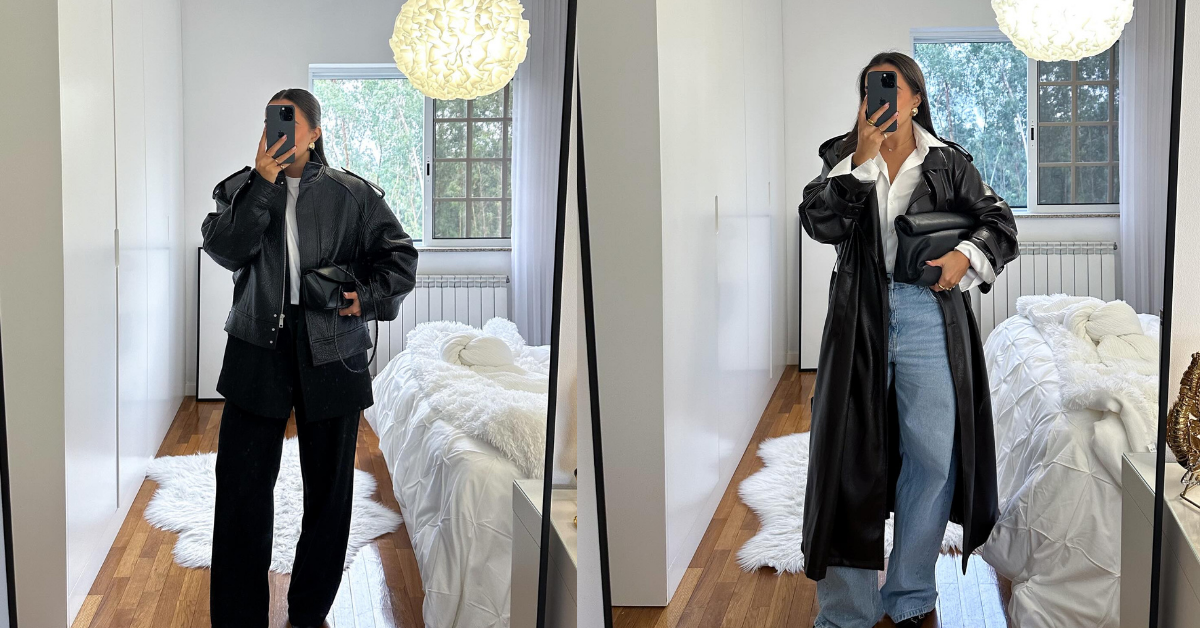
You can copy an influencer outfit perfectly and still feel like it “doesn’t work” on you. That’s not because you have the wrong body, the wrong vibe, or the wrong closet. It’s because what you’re trying to copy usually isn’t just clothes.
Influencer outfits are a bundle: the exact lighting, the camera distance, the pose, the crop of the photo, the context (often “standing still for content”), plus pieces chosen because they look good on camera and sell well. The outfit you see is the final image, not the whole system that made it look good.
There’s also the uncomfortable part no one says out loud: a lot of content is built around monetization. Affiliate posts and “shop my links” are a real part of the creator economy, and they shape what gets shown and repeated.
So if you want influencer style that actually works in your real life, the move is not “copy harder.” It’s “translate better.”
This guide shows you how.
Quick takeaways
- The photo is not neutral. Camera distance and viewing angle can change how bodies and proportions look in images (selfies can even be judged “slimmer” than other angles in research).
- Wide-angle smartphone shots and close framing can distort proportions.
- Influencer outfits are often optimized for still photos and engagement, not comfort or movement in your day-to-day.
- A lot of “my outfit doesn’t look like theirs” is actually a mismatch in proportion, fabric weight, and styling details, not the item category.
- The fix is to copy the formula, not the exact pieces: silhouette + contrast + color story + one focal point.
- If you only do one thing: identify the outfit’s anchor piece and its proportion trick, then recreate those with your own basics.
Why copying rarely works
1) The camera is changing the outfit
A photo is a design tool. Perspective and angle can make legs look longer, waists smaller, shoulders broader, and garments look smoother than they feel in motion. Research on viewing angle has found that selfies can be judged slimmer than other perspectives.
Popular science photography explanations also point out how perspective distortion and smartphone-style wide angles change appearance depending on distance and framing.
Translation: the “outfit” you’re copying includes a lens.
2) You’re seeing a styled moment, not a full day
A lot of influencer outfits are built for standing, posing, and one flattering angle. When you try to live in it, the weak spots show up: waistband gaps, stiff fabrics, a top that rides, a skirt that twists, a shoe that hurts. Even general style coverage notes social content can hide fit and comfort issues through controlled posing and editing.
This won’t work if you’re trying to copy a look that is fundamentally built around discomfort (ultra-high heels, ultra-tight shapewear, a jacket that only sits right when you never lift your arms). Some outfits are content, not clothing.
3) Their “basics” are not your basics
A white tee is not a white tee. Fit, neckline, sleeve length, fabric thickness, and how it’s tucked matter more than the logo. Same for jeans: rise and leg shape can change the whole silhouette.
Two people can both wear “straight-leg jeans + blazer” and look like completely different outfits because the proportions are different.
4) Their lifestyle is not your lifestyle
An influencer might dress for:
- walking from car to cafe
- indoor photos
- mild weather
- “wear it once for content”
You might need:
- commuting on foot
- errands, kids, dogs
- sitting at a desk
- actual weather
It’s not a style problem. It’s a use-case mismatch.
5) Monetization influences what you see
Affiliate marketing and shoppable links are deeply tied to fashion influencing, and research has analyzed influencer affiliate posts and how they drive engagement and outcomes.
That doesn’t mean creators are lying. It means the system rewards repeatable, linkable items and “newness.” Your closet rewards wearability.
The adaptation framework: copy the recipe, not the photo
Step 1: Name the look in one sentence
Not “that exact outfit.” The vibe.
Examples:
- “Clean minimal with one oversized piece”
- “Soft sporty with a polished shoe”
- “90s simple with a sharp waist”
- “Cozy monochrome with texture contrast”
If you can’t name it, you’ll copy random details and miss the point.
Step 2: Identify the 4 building blocks
Look at the outfit and pull these out:
- Silhouette: fitted top + wide leg? oversized top + slim bottom? long line?
- Proportion trick: high waist? cropped jacket? long coat? exposed ankle?
- Color story: neutrals? tonal? one accent color?
- Focal point: statement shoe? bag? sunglasses? coat?
This is where most “copy fails” happen. People copy the shoes and forget the proportion trick.
Step 3: Replace items with equivalents from your closet
Do not search for the exact product first. Shop your closet like this:
- Same silhouette category (not identical piece)
- Similar fabric weight (this matters a lot)
- Similar level of contrast (tight vs loose, matte vs shiny)
Example translation:
- Influencer: tiny tank + giant cargo pants + chunky sneaker
- You: fitted tee + wide-leg trousers + your clean sneakers
Same recipe, different pantry.
Step 4: Adjust for your body preferences, not your body “type”
Instead of “I’m not built for this,” try:
- “I want the waist to sit higher”
- “I need more structure at the shoulders”
- “I prefer less cling on my stomach”
- “I want my legs to look longer”
Then tweak the pattern:
- raise the waist (higher rise, tuck, belt)
- shorten the top layer (crop, half-tuck)
- change shoe shape (pointed, low profile, chunkier)
- change hem length (ankle vs full length)
This is optional. Skip it if you hate analyzing proportions. You can still get 80% of the result by copying the silhouette + color story alone.
Step 5: Reality-test it in motion
Before you decide “it doesn’t work,” do a quick test:
- sit down
- walk across the room
- lift your arms
- look in natural light
If it only looks good frozen, it’s a content outfit. If it still looks good moving, you’ve translated it successfully.
The 7 reasons an influencer outfit “looks better” and the exact fixes
1) Proportion mismatch
What happens: you copied items but not the length relationships.
Fix: match the ratios.
- If their top is cropped, you need a top that hits the same relative point on your torso (or do a tuck).
- If their pants are long and pooling, yours might need to be hemmed to avoid looking sloppy.
2) Fabric weight mismatch
What happens: their sweater drapes, yours clings. Their blazer holds shape, yours collapses.
Fix: prioritize fabric behavior over brand.
- If the reference looks crisp, choose stiffer fabrics.
- If it looks fluid, choose softer drape.
Trade-off with no neat solution: drapier fabrics often show more body outline, while structured fabrics can feel less comfortable. You may have to choose which matters more for you.
3) The “invisible tailoring” gap
What happens: theirs fits like it was made for them because it probably was adjusted or carefully selected.
Fix: tailor the high-impact stuff:
- hem pants
- take in a waist slightly
- shorten blazer sleeves if they swallow your hands
One good hem can make a basic outfit look expensive.
4) Styling details you didn’t notice
Influencer looks rely on tiny choices:
- sleeve pushed up
- collar popped slightly
- belt buckle centered
- bag strap shortened
- hair adds height
- one intentional piece of jewelry
Fix: pick one detail to copy exactly. Just one.
5) Shoe energy mismatch
Shoes carry the vibe. If their outfit is “clean minimal” and you swap in a busy sneaker or heavy boot, the look changes.
Fix: copy the shoe’s shape category:
- sleek and low-profile
- chunky and sporty
- sharp and pointed
- delicate and strappy
6) Your setting is different
An outfit that looks chic in a bright studio can look weird in a grey commute.
Fix: adapt to context:
- add a topper (coat, jacket) that matches your weather
- swap delicate shoes for practical ones, but keep the same “energy”
- choose darker tones if you’ll be in messy weather
7) The camera effect
Yes, it matters. Angle and perspective can change perceived proportions.
Fix: judge your outfit in a mirror and in a normal photo taken from farther away (not a close selfie). If you only test with a close front camera photo, you’re grading yourself with the wrong tool.
How to adapt influencer outfits by lifestyle
If you walk a lot or commute
- Keep the silhouette, upgrade the shoe to something walkable
- Add one structured outer layer (denim jacket, trench, blazer)
- Choose fabrics that don’t wrinkle instantly
If you sit at a desk all day
- Prioritize waist comfort and tops that don’t ride up
- Choose pants that look good seated (no dramatic pulling at hips)
- Swap “tight crop top” for “fitted tee” but keep the same proportions
If you’re a “repeat outfit” person
Stop copying one-off looks and start copying formulas. Outfit formulas work because they’re structure, not novelty.
Examples:
- straight-leg jeans + fitted top + structured layer + clean shoe
- wide-leg trousers + tucked knit + belt + sleek sneaker/loafer
- midi skirt + simple tee + jacket + minimal jewelry
If you hate shopping
Follow creators for ideas, but build a small translation kit in your closet:
- one great jacket/topper
- one great pair of jeans/trousers
- one great shoe category you actually wear
- one “focal point” accessory (bag, earrings, sunglasses)
You’ll recreate the vibe without buying the exact link every week.
The “Adapt, Don’t Copy” checklist
Next time you screenshot a look, write this under it:
- Vibe: ______
- Silhouette: ______
- Proportion trick: ______
- Color story: ______
- Focal point: ______
- My swap: ______
- My lifestyle fix: ______
If you can fill that out, you can recreate the look in a way that feels like you.
FAQ
Why does the same outfit look different on me?
Usually it’s one of three things: proportion (length relationships), fabric behavior, or context. And yes, camera angle can also change perceived proportions and “slimness” in images.
Is it my body type?
It’s almost never “your body type.” It’s the translation. You’re copying products when you should be copying ratios and structure.
How do I stop wasting money on “influencer pieces”?
Delay the purchase. First recreate the look using closet equivalents. If you still love the formula after wearing it twice, then buy the missing piece.
Are influencers lying?
Not necessarily. But affiliate and shoppable content is a real part of how fashion influencing works, and it shapes what gets shown repeatedly.
What’s the easiest way to adapt an outfit fast?
Copy the color story and the silhouette, then add one focal point. That gets you most of the effect with the least effort.
Just a little note - some of the links on here may be affiliate links, which means I might earn a small commission if you decide to shop through them (at no extra cost to you!). I only post content which I'm truly enthusiastic about and would suggest to others.
And as you know, I seriously love seeing your takes on the looks and ideas on here - that means the world to me! If you recreate something, please share it here in the comments or feel free to send me a pic. I'm always excited to meet y'all! ✨🤍
Xoxo Charlotte