

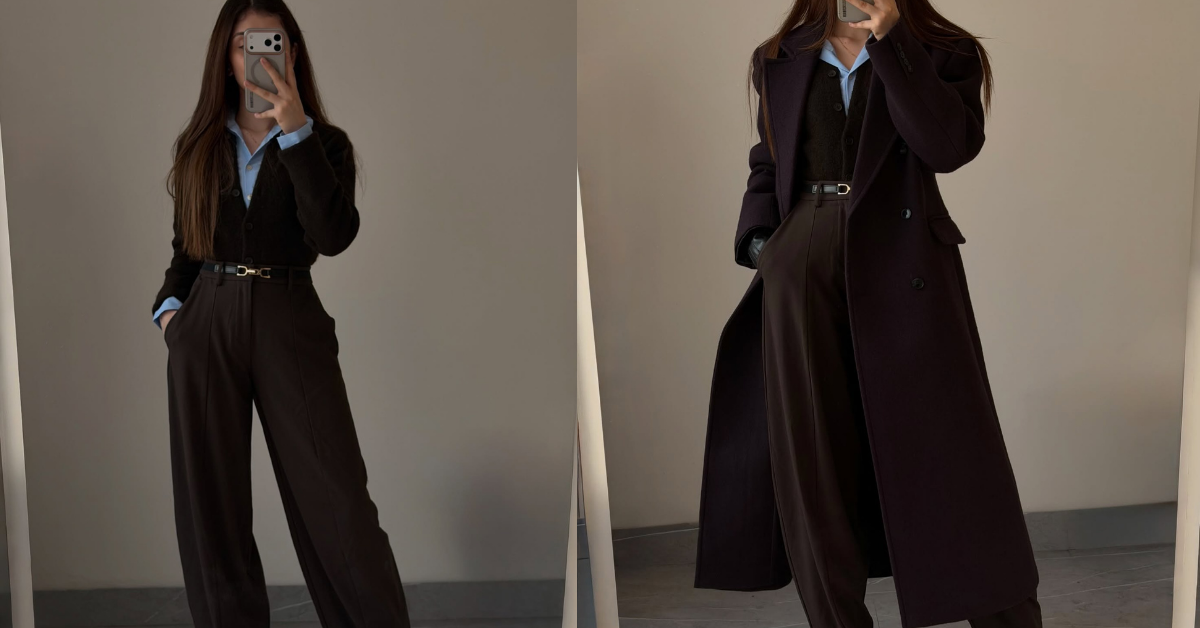
If you’ve ever stepped off a warm train and into an office that feels like a walk-in fridge, you already know the problem: you can’t dress for “the weather” anymore. You’re dressing for a set of microclimates that change every 20 minutes. Most people try to solve it by picking one “safe” outfit and suffering through the rest of the day, or by piling on bulky layers that look fine in the mirror but feel awful once you start moving.
The fix is not more clothes. It’s a system.
This guide is a simple outfit strategy built around temperature swings: hot commute, cold office, unpredictable in-betweens (wind, rain, crowded buses, sun on the platform). You’ll learn how to choose a base that won’t turn into a sweat trap, layers that actually breathe, and a “swap plan” that takes 30 seconds at your desk.
If your mornings are unpredictable, some of this prep simply won’t stick, and that’s fine. The goal isn’t perfection. It’s fewer bad mornings.
Quick answer for skimmers
- Dress for the warmest part (commute), then add “cold insurance” for the office.
- Use one breathable base layer, one insulating mid-layer, and one outer layer you can vent easily.
- Avoid thick, clingy knits as your base. They hold sweat and stay cold after.
- Choose layers that work both on and off so you don’t end up holding a coat all day.
- Build an outfit around one “anchor” piece that always looks presentable (a good trouser, a skirt, a simple dress).
- Keep your warmth in removable items: cardigan, vest, scarf, socks, tights, light puffer.
- Make the “transition” easy: shoes, bag, and hair should not depend on the weather.
If you only do one thing:
Pick a base layer you can sweat in without regret. Most outfit failures start with the wrong base.
The decision framework
Think in conditions, not outfits.
If you want to feel cool on the commute but not freeze at your desk
- Base: breathable and close to skin (not thick)
- Mid-layer: easy on, easy off (cardigan, shirt-jacket, vest)
- Office warmth booster: one small item that adds real heat (scarf, warm socks, tights, vest)
If you want to look polished without lugging layers around
- Build around a presentable anchor: structured trouser, midi skirt, knit dress, simple button-down
- Use smart layers that look like part of the outfit (blazer, cardigan, vest) rather than survival gear
If your office is consistently cold
- Put insulation below the waist too (tights, socks, warm loafers)
- Choose a mid-layer that can stay on all day without looking like loungewear
If you’re always running late
- Create a default “temperature swing uniform” you can repeat
- Keep your backup layer at work (one cardigan or blazer that lives on your chair)
I usually tell people to stop chasing variety in the morning. One good default outfit does more than ten options.
Common mistakes (and the easy fixes)
Mistake 1: Dressing for the office and sweating through the commute
Fix: Dress for the commute, then layer up at your desk. Sweat is the enemy because once you stop moving, it turns into cold.
Mistake 2: Wearing a thick sweater as the base
Fix: Make the sweater the layer you can remove, not the layer trapped under everything. Thick bases get clammy, then cold.
Mistake 3: Wearing the wrong “in-between” jacket
You know the one: too warm to wear on a fast walk, too light for standing outside.
Fix: Choose an outer layer with ventilation options: zip, buttons, or open front. Also pick something you can comfortably carry for 10 minutes without hating your life.
Mistake 4: Ignoring feet and legs
Cold office floors are brutal.
Fix: Warmth below the knee: socks, tights, boots, or loafers with real soles. This is often the difference between “fine” and “miserable.”
Mistake 5: Layers that don’t layer
If your shirt is bulky, your cardigan tight, and your coat slim, everything fights.
Fix: Keep each layer slightly roomier than the one under it.
Step 1: Choose the right base layer (the “don’t regret it later” layer)
Your base has one job: manage sweat and feel okay after you arrive. It’s not about warmth. It’s about comfort across conditions.
What usually works
- Lightweight knit tees
- Ribbed tanks under a shirt
- Breathable long sleeves
- Smooth bodysuits (if you like them)
- Soft button-downs over a tank
Fabric guide (simple version)
- Good for swings: merino blends, cotton blends, lyocell/tencel, technical “active” fabrics that don’t feel plastic
- Trickier: thick cotton that stays wet, heavy viscose that clings, anything that feels sweaty instantly
This won’t work if your commute is extremely short (like 5 minutes) and your office is freezing. In that case, you can get away with warmer bases because you’re not generating heat for long.
Fit matters more than you think
- Too tight = traps heat and sweat
- Too loose = bunches under layers and feels sloppy
Aim for “close but not clingy.”
Step 2: Pick a mid-layer that looks intentional
This is the layer that saves you at your desk. The best mid-layer is the one you don’t mind wearing all day.
Strong options
- Cardigan (structured if possible): easiest on/off
- Blazer: looks polished, decent warmth, less cozy than a cardigan
- Sweater vest: surprisingly great for office cold because it warms your core without overheating your arms
- Overshirt / shirt-jacket: good for casual offices, easy to vent
The no-solution trade-off (because it’s real)
Blazers often look the most “professional,” but they’re usually less warm than you want in a truly cold office unless you size up or choose heavier fabric. Cardigans are warmer and more flexible, but they can look a bit too relaxed in some environments. You can’t fully solve that without choosing which side matters more to you.
Step 3: Outerwear that doesn’t ruin the plan
Your coat or jacket is for wind, rain, and waiting around. For a hot commute, you want something you can vent, open, or carry easily.
Good outerwear styles for temperature swings
- Light trench or mac coat
- Unlined or lightly lined wool coat (for cold seasons)
- Lightweight puffer that compresses
- Utility jacket with room for layers
The “carry test”
Before you commit to a jacket, ask:
- Can I carry this comfortably for 10 minutes if I’m overheating?
- Does it still look okay draped over an arm or on the back of a chair?
If the answer is no, it will end up on the floor somewhere.
Step 4: The principle that actually makes this work
Here’s the principle: the layer you remove should be the layer that traps the most heat.
That means:
- Warmth lives in removable layers (mid-layer, scarf, vest)
- Base stays stable
- Outerwear is mostly about wind and rain, not your only warmth
When you arrive:
- Vent outerwear first (unzip, unbutton).
- Give yourself 60 seconds to cool off before you add warmth back.
- Add the mid-layer once you’re dry and settled.
That tiny pause is the difference between “comfortable all day” and “chilled because you sweated.”
Step 5: Make the office part effortless (your 30-second swap)
You don’t want an outfit that requires a full costume change in a bathroom.
The office survival kit (minimal)
- One warm layer that lives at work (cardigan, blazer, sweater vest)
- Warm socks or tights (depending on your style)
- Optional: a scarf that doubles as a mini blanket
This is optional. Skip it if you already have a reliable layer waiting at your desk or your office temperature is not that dramatic.
Routines: How to apply the strategy without thinking
If you already have a routine that works, you can skip this section and go straight to the variations below.
The 60-second morning checklist
- What’s the warmest part today? (Usually the commute, especially on crowded transport.)
- What’s the coldest part today? (Often your desk, meeting rooms, or near windows.)
- Choose base for warmest part.
- Add removable warmth for coldest part.
- Pick shoes based on the coldest surfaces you’ll stand on.
The “default uniform” approach
Pick one outfit formula and repeat it:
- Base top + trouser + mid-layer + outerwear
- Or base top + skirt + tights + mid-layer + outerwear
- Or dress + tights + blazer/cardigan + outerwear
Once you find one that works, keep it. Decision fatigue is half the pain here.
Options and variations by use case
1) Best for very cold offices
- Breathable base (short sleeve or thin long sleeve)
- Warm mid-layer you can keep on all day (cardigan or sweater vest)
- Warm legs (tights or thicker socks)
- Shoes with real soles (cold floors matter)
Why it works: You insulate your core and legs, so you’re not relying on one bulky top.
2) Best for hot, crowded commutes
- Sleeveless or short-sleeve base
- Mid-layer that’s easy to put on after (cardigan, blazer, overshirt)
- Outerwear you can open fully
- Hair and bag choices that don’t make you hotter
Tip: Choose a base that still looks fine on its own. You’ll likely be wearing it solo at some point.
3) Best for “polished but practical”
- Neutral base top
- Structured trouser or midi skirt
- Blazer or structured cardigan
- Sleek coat or trench
Trade-off: You might sacrifice a bit of warmth for sharper lines.
4) Best for casual workplaces
- Tee or long sleeve base
- Overshirt or hoodie under a jacket (if your office culture allows)
- Sneakers or boots
- Add warmth via socks and scarf instead of bulky tops
5) Best for walking commutes
- Base that can handle sweat
- Mid-layer that breathes (avoid super dense knits)
- Outerwear that blocks wind but vents easily
Watch out: Windproof layers can trap heat quickly. Pick ones you can open.
6) Best for “I hate carrying extra stuff”
- Make the mid-layer part of the outfit (cardigan you keep on, blazer you wear indoors)
- Choose outerwear that is not too warm
- Add warmth in small pieces: scarf, tights, socks
Reality check: If you refuse to carry anything ever, you’ll have less flexibility. That’s just how physics works.
FAQ
What’s the best single item for a freezing office?
A cardigan or sweater vest that looks intentional. It’s warmth you can control without changing your whole outfit.
I always sweat on the commute. What am I doing wrong?
Usually it’s the base layer or the first layer you can’t remove. Dress lighter than you think for the commute, then add warmth after you arrive.
Are scarves actually useful or just for style?
They’re useful because they add warmth fast and come off fast. Also, offices that feel cold often have drafts, and the neck area makes a big difference.
What about leggings under trousers?
They work if your trousers have enough room and you don’t overheat on the commute. If you sweat, leggings can make you colder later.
How do I make this work with dresses?
Use a breathable dress as the base, then control warmth with tights and a mid-layer (blazer or cardigan). Dresses can be great for swings because they are one piece.
Should I keep a jacket at work?
If your office is consistently cold, yes. A “work cardigan” is one of the simplest upgrades you can make.
What shoes help the most?
Shoes with thicker soles. Cold floors are sneaky. Even a slightly more substantial sole can change how warm you feel.
I’m stuck between looking professional and staying warm. Any shortcuts?
Professional-looking layers tend to be thinner. If warmth is the priority, lean into a structured cardigan or a smarter vest. Otherwise you’ll end up distracted and uncomfortable.
Just a little note - some of the links on here may be affiliate links, which means I might earn a small commission if you decide to shop through them (at no extra cost to you!). I only post content which I'm truly enthusiastic about and would suggest to others.
And as you know, I seriously love seeing your takes on the looks and ideas on here - that means the world to me! If you recreate something, please share it here in the comments or feel free to send me a pic. I'm always excited to meet y'all! ✨🤍
Xoxo Charlotte